Archives for September 2025

Why School Spirit and Engagement Matters for Students with Special Needs

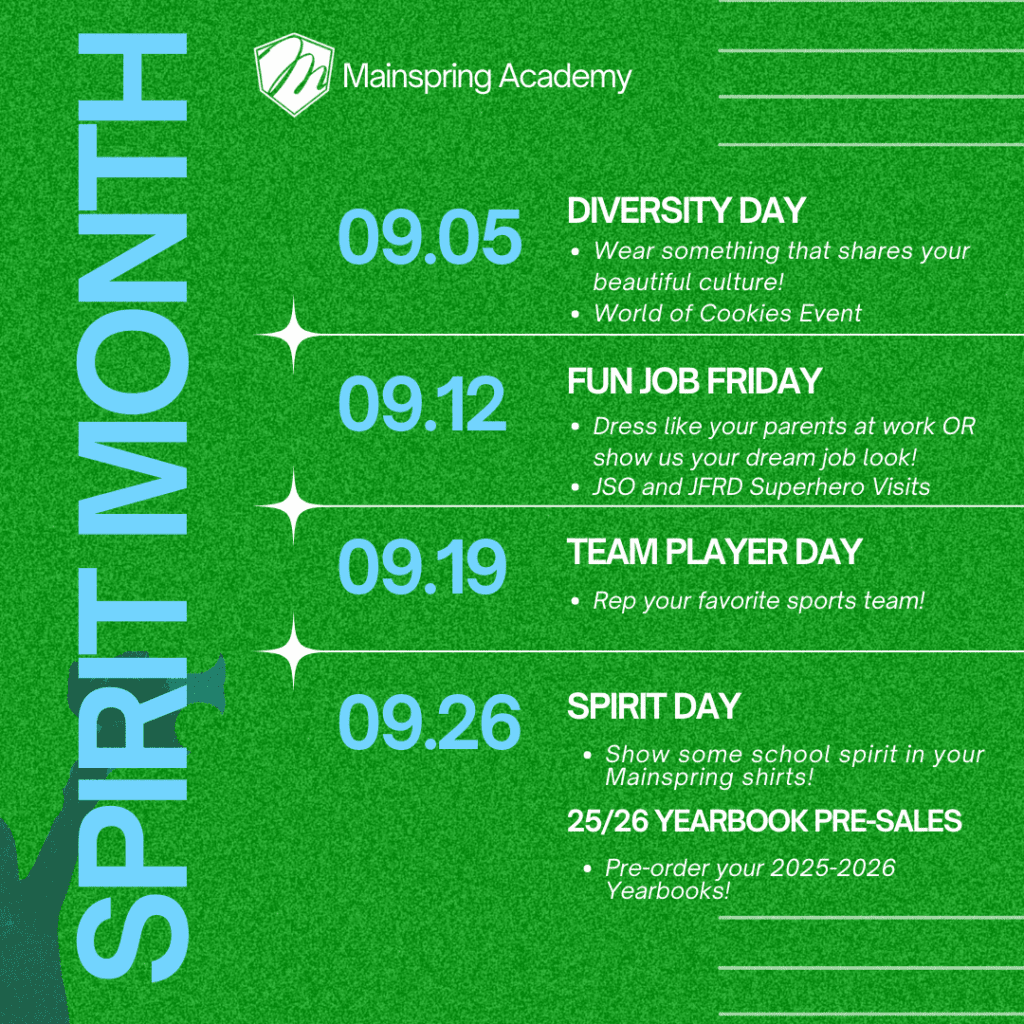
School spirit and engagement play a powerful role in helping children feel connected, proud, and included. At Mainspring Academy, celebrations like Spirit Month may look fun on the surface, but they actually serve a deeper purpose: building belonging, strengthening social connections, and giving students opportunities to practice important everyday skills.


Why School Spirit Is Important for Our Students

Research shows that students with strong connections to their school community experience better social, emotional, and functional outcomes (Kuhfeld et al., 2020). For children with IDDs, those connections may look different than they do for typical students, but they are just as valuable.

School spirit and engagement activities are functional learning opportunities in disguise. Through events and celebrations, students are practicing skills that transfer into daily life. At Mainspring Academy, school events are more than just costumes and decorations:

  • They create routine-breaking experiences that help students practice flexibility.
  • They provide team-based activities that nurture cooperation, patience, and turn-taking.
  • They encourage students to express themselves and self-advocate by choosing foods and activities they enjoy.
  • They allow children to explore different cultures and holidays, broadening their world in a hands-on way.
  • They help families and students create core memories together, strengthening bonds that last a lifetime.
  • They provide a safe and comfortable place where students can celebrate, be themselves, and feel accepted.
  • They remind us that fun, enrichment, and traditions are what make up a true school experience, giving students pride in belonging to their community.

The Role of Parents in School Engagement

Parent engagement is just as important as student participation. When families volunteer, join the Parent Action Committee (PAC), or help plan events, they model the value of community involvement.

  • Parents help shape meaningful experiences – bringing in foods, decorations, and ideas that create memorable events.
  • Students benefit when they see their parents actively connected to the school, creating a stronger sense of pride and belonging.
  • Family participation ensures that events are not just fun, but inclusive and supportive of all students’ needs.

By joining in, parents extend the message: Our family belongs here, and we are proud to be part of this community.

Families can reinforce school spirit and engagement by bringing small traditions into daily life:

  • Use countdown calendars at home to prepare for events.
  • Practice participation – let your child choose clothing or accessories for a celebration.
  • Involve your child in preparation – shop together for small items to bring or help decorate.
  • Celebrate milestones at home with music, snacks, or family traditions.
  • Share stories and photos from school events to extend conversations and build excitement.

Even small efforts at home reinforce the message: You are part of something bigger, and your contributions matter.

Belonging and Pride

Every special education student deserves the chance to feel:

  • Pride in being part of their school.
  • Connection to peers and staff.
  • Inclusion in traditions, no matter their ability level.
  • Joy in celebrating together as a community.

At Mainspring Academy, school spirit isn’t just a celebration – it’s a tool for inclusion. By engaging in these experiences, students build memories, friendships, and skills that extend far beyond the classroom.

Because every child deserves to feel that they are not just learning in a classroom, but belonging to a community that celebrates them


Sources

Kuhfeld, M., et al. (2020). Student engagement and outcomes: The importance of belonging and participation. Journal of Applied Developmental Psychology.

National Core Indicators. (2022). In-Person Survey Report: Engagement and Inclusion. https://www.nationalcoreindicators.org/
Building Independence: How Parents Can Bring Community-Based Learning Into the Home

Families Looking for Everyday Opportunities

Parents of children with intellectual and developmental differences (IDDs) often wonder: How can I prepare my child for life beyond the classroom? At school, students participate in activities like Fun Job Friday, where they dress up like their parents or dream careers. But building job skills and confidence doesn’t have to wait for school and special events. It can begin in simple, meaningful ways at home.

The truth is, our children thrive when they can practice community-based learning: tasks and experiences that connect directly to real-world life. This doesn’t just prepare them for the future, it helps them feel capable, valued, and included right now.


Why It Matters

For many students with higher needs, traditional academics are only part of the story. Success in adulthood depends on functional and vocational skills – the ability to follow routines, complete tasks, and engage with the community.

Research shows that employment rates for adults with developmental disabilities remain below 20% nationwide (National Core Indicators, 2022). Yet when students are given opportunities to practice independence early, they’re far more likely to participate in the workforce, volunteering, or supported community programs later in life (Butterworth et al., 2021).

At home, parents are uniquely positioned to reinforce these skills. Small daily experiences can become stepping stones toward greater independence.


What These Skills Look Like at Home and in the Community

Mainspring Academy encourages families to focus on baseline skills, which are the kinds of structured, repeatable activities children can practice every day. These tasks not only build independence but also help children feel purposeful and included. Examples include:

Self-Care and Daily Living

  • Brushing hair with support
  • Wiping face or hands with a cloth
  • Putting dirty clothes in the hamper
  • Pulling pants up or down with prompting during toileting
  • Placing toothbrush in holder or toothpaste back on the counter
  • Helping put on socks or shoes
  • Hanging up a towel after use

    Household Tasks
  • Sorting socks, silverware, toys, or pantry items by color or category
  • Wiping tables with a cloth or spraying water on plants
  • Carrying lightweight trash to a bin or replacing small liners with help
  • Putting clothes into the washer/dryer or transferring them from basket to machine
  • Stirring pre-measured ingredients, pressing microwave buttons, or placing napkins at the dinner table

    Structured, Repetitive Work
  • Stamping envelopes
  • Placing stickers on paper, bags, or donation items
  • Packing straws, napkins, or utensils into bags
  • Counting or stacking towels, cans, or blocks
  • Putting markers or crayons back into a container

    Sensory-Friendly Routine Jobs
  • Squeezing a spray bottle onto plants
  • Using a hand vacuum on a rug or couch
  • Sorting beads, buttons, or shells by color or shape
  • Carrying light weighted bags for “heavy work” input
  • Folding washcloths or dish towels with assistance

    Supported Volunteering in the Community (with Parents)
  • Decorating cards for nursing homes or neighbors
  • Packing food into small bags for a pantry or community drive
  • Dropping items into donation bins
  • Picking up trash with grabbers at a beach or park
  • Handing out napkins, water bottles, or flyers during family-supervised events

    Creative Options
  • Finger-painting or stamping cards for loved ones or community groups
  • Helping decorate for holidays or family celebrations
  • Stringing beads or pasta onto yarn for simple decorations
  • Choosing music for family time or classroom celebrations
  • Assisting with photo collage or craft projects (handing photos, gluing pieces with help)

Even though these tasks may look small, they are deeply meaningful. They teach focus, responsibility, and consistency, while giving children the chance to see their contributions valued by their family and their community.


The Most Important Thing: Dignity, Purpose, and Inclusion

Every child’s future looks different. Some may never hold a competitive job, but that doesn’t mean their work isn’t valuable. The goal is not perfection, it’s practicing independence in ways that foster dignity and pride.

At home and in the community, children can experience:

  • Contributing to their environment and community through small, achievable tasks
  • Building independence by practicing daily routines
  • Experiencing pride in “having a job” or responsibility
  • Reducing isolation by being part of a team, family, or program

Even simple responsibilities can help children feel connected and included. At Mainspring Academy, families are encouraged to see independence as meaningful in every form whether it’s putting away toys, stamping letters, or helping pack a bag of food for someone in need. These moments add up to dignity, belonging, and purpose.


Practical Ways to Get Started

Parents can begin integrating community-based learning at home with just a few simple steps:

  1. Choose one task your child already shows interest in (like stacking, pouring, or matching).
  2. Model and repeat the activity, keeping it short and consistent.
  3. Add responsibility gradually, for example, move from matching socks at home to placing socks in a store basket.
  4. Celebrate effort, not perfection. Every completed task builds confidence.
  5. Take it into the community. Once comfortable at home, try small, supported outings—like mailing a letter, decorating a card for a neighbor, or picking up trash at the beach together.

A Community Where Every Child Belongs

Representation and inclusion aren’t just about who sits in a classroom…they’re about how every child is prepared to live meaningfully in their world. At Mainspring Academy, families are encouraged to embrace community-based learning at home as part of the journey toward independence.

Because every child deserves the chance to see themselves as capable, valued, and ready to contribute at school, at home, and in the community.


Sources

September 2025 Newsletter

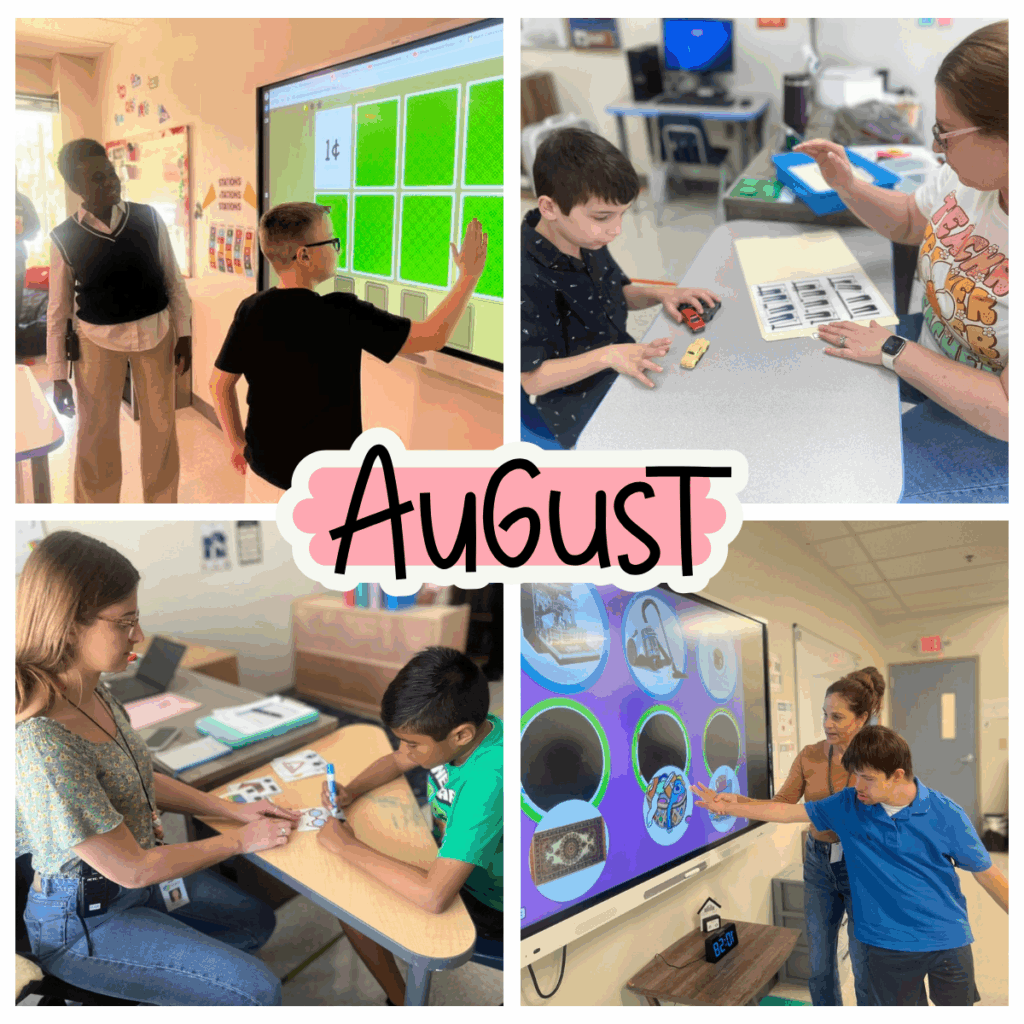
AUGUST 2025– The first month of the 2025–2026 school year has been full of energy, growth, and connection at Mainspring Academy. Students have been settling into their classrooms, exploring new learning routines, and making meaningful progress toward their goals. Teachers and staff have worked tirelessly to create safe, welcoming environments that nurture both academic and social development. Already, there have been countless moments to celebrate, whether it’s students showing pride in their work, classrooms planning creative projects, or families stepping in to support school events. The positive momentum is clear, and it reflects the shared commitment of staff, students, and families to making this year one of growth and achievement. As we move into the fall, Mainspring Academy remains dedicated to building on this strong foundation. With continued teamwork and enthusiasm, there’s no doubt the months ahead will bring even more opportunities to shine.

Please mark your calendars for the Open House, October Intersession Application Deadline, and September Spirit Month Event dates listed below!

Want to submit photos, testimonials, or stories? Send them here>
Want to Shout Out a staff member for going above and beyond? Tell us about it here>

ILP SEASON AT MAINSPRING!
By Dina Parisi, Head of School


The new school year not only brings new routines, but also one of the most important times of year here at Mainspring—ILP season!  Most of our students have their annual ILP meeting between October and January, however what many parents may not realize is that the ILP process starts for teachers and administrators on the first day of school!

ILP stands for Individual Learning Plan. If you’ve heard of an IEP (Individualized Education Plan) in public schools, it’s similar in spirit but different in purpose. Unlike IEPs, which are legally binding compliance documents, our ILPs are accountability documents. They help us set priorities for each student and give families a clear picture of progress. Most importantly, they remind us that education is a team effort, and we love when parents are part of the process!

What Parents Can Expect

Right now, our teachers are busy getting to know your children. They’re using curriculum-based assessments, taking behavior and participation data, and jotting down observations about what each student enjoys, struggles with, as well as where they shine.

All of this information comes together to create a Present Level of Performance (or PLOP). This “snapshot” is the starting point for setting meaningful goals in your child’s ILP.

And here’s the good news – an ILP is not set in stone! If your child reaches a goal quickly, or if we realize we’ve set the bar in the wrong place, we can make changes. We also adjust goals as student needs or circumstances shift. In other words, the ILP is a living document, designed to grow and change right alongside your child.

ILPs also help shape the information you’ll see on progress reports and report cards. While they don’t capture everything your child does during the school day, they do highlight the priorities we’re tracking most closely.

Two Types of ILPs at Mainspring

We use two different kinds of ILPs, depending on a student’s age and stage of development:

 • Academic ILP – Typically for students in 8th grade and younger. These plans include goals across domains such as Cognitive and Academic skills, Independent Functioning, Social-Emotional/Behavior, Health, and Communication. Sometimes, students may move off an Academic ILP earlier if it makes sense and we as a team (remember you are part of this!) decide it is the best path forward.

 • Functional Academic ILP – Usually for students in 9th grade and older. These plans are more transitional in nature, focusing on preparing students for life after school. Domains include Functional Academics, Self-Advocacy, Vocational, Independent Functioning, Health, Social-Emotional, and Communication. The goal here is to build as many life skills as possible as students prepare for adulthood.

 • NEW THIS YEAR- Temporary ILP – Students that are new to Mainspring will be receiving their a temporary document for us to use as a starting point for goal creation and progress monitoring.  These are ready and going out this week!  While there will not be a formal meeting, we are happy to have a brief meeting to discuss our thought process for initial goals.  These goals are usually meant to help the student learn basic school skills that are important to master in order to be successful in our program.  Domains for TLPs are Cognitive Academic, Social-Emotional, Independent Functioning, and Communication.

At Mainspring, we know that every child’s path is unique. The ILP is one of the ways we honor that individuality – by creating personalized goals, tracking meaningful growth, and celebrating progress along the way. We can’t wait to partner with you this ILP season to make sure each student is set up for success, both now and in the future!

UPCOMING EVENTS

  • SPIRIT MONTH ACTIVITIES – View Schedule Above!
  • Monday, September 1st – Mainspring Spiritwear Store Closes. View Spiritwear Store>
  • Monday, September 1st – SCHOOL CLOSED for Labor Day
  • Tuesday, September 2nd – PAC Meeting in the Cafeteria (9:00am)
  • Monday, September 15th – Tuition and Extended Care Due
  • Friday, September 26th – Yearbook Pre-Sales (Link Coming Soon)
  • Friday, September 26th – Fall Intersession Applications and Payments Due (Quickschools)

Questions or missing any forms? Many questions and requests can be submitted in the Parent Corner of our website! More Information>

MSA BIRTHDAYS!

Jaelyn – September 4th

Sam N. – September 10th

Olivia – September 13th

Mariah – September 13th

Nathan Muzichuk – September 14th

Luke – September 15th

Bryce – September 19th

Mr. Ben – September 28th

DIFFERENCE MAKERSHonoring Trailblazers this Summer

National Assistive Technology Awareness Month: Recognizes tools like AAC devices, voice output tools, fidget aids, noise-reducing headphones, adaptive seating, and more – technology that empowers non-speaking and sensory-sensitive learners to communicate, regulate, and learn with confidence.

September 12th, Birthday of Jennifer Keelan-Chaffins: At just 8 years old, Jennifer, who has cerebral palsy, crawled up the steps of the U.S. Capitol during the historic 1990 “Capitol Crawl,” helping to spark the passage of the Americans with Disabilities Act. Her bravery helped change laws (and minds) about what children with disabilities can do.

These milestones encourage our students to see their challenges not as limitations, but as strengths that contribute to a more inclusive and compassionate world!

VOLUNTEER OPPORTUNITIES

A friendly reminder that all volunteers NOT listed as a student’s parent, guardian, or sibling must complete a Volunteer Application to be kept on file. More Information>

Report your required annual parent participation hours. Hours are only logged if you report them, without exception Submit Hours Here>

Parent Action Committee (PAC) Meeting Tuesday, September 2nd at 9:00am in the Mainspring Academy Cafeteria.

World of Cookies Signup for Friday, September 5th Sign Up Here>

Volunteer for our Special Olympics Events this 2025-2026 School Year. Sign Up Here>

Curious about Mainspring Academy’s needs and how to support us through donations, pledges, or sponsorships? Check out our Ways to Give Page. More Information>

MERCH

Mainspring Store> View Spiritwear Catalog>